
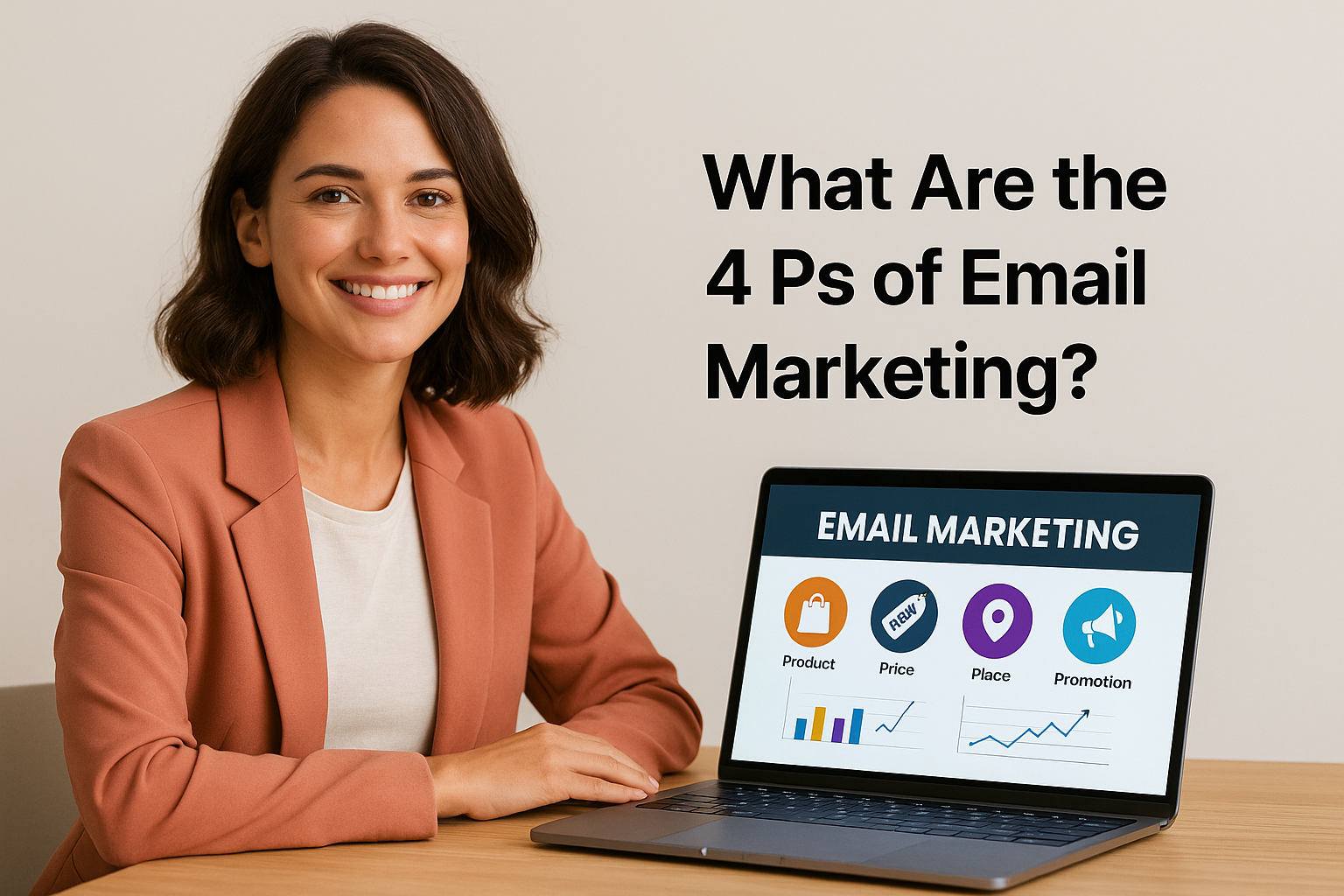
What Are the 4 Ps of Email Marketing? A Simple Yet Powerful Guide for Better Campaigns
Email keeps proving itself as a durable engagement engine—steady, persistent, and always ready to drive measurable outcomes. Trends shift, inboxes overflow, yet the foundational levers stay firm. This is where the 4 Ps, which are Product, Price, Place and Promotion, come into the main place, setting up a framework for teams to organise campaigns that can make more interest, greatly influenced by customer behaviours, and move customers along the business funnel quietly and efficiently. Whenever applied with strong discipline, these four pillars turn email from a simple tool of communication into a performance-based community.
Product: The Value You Deliver in Every Email
Inside email marketing, “product” behaves less like a physical item and more like a composite of message, offer, tone, and visual alignment. At times it is a sleek notification. Sometimes it is a short phrase solving the user's issue before they mention it. And in some cases, it is a detailed email mixing data-based facts with sharp word choice.
A few operational levers accelerate product strength:
- A clean layout that feels intentional, almost like a quiet cue that the brand knows its own voice.
- Content that solves something, even if the reader doesn’t realise they needed solving.
- Matching message type to intent—newsletter, promo, nudge, or lifecycle flow.
- Precision-driven personalisation that bends itself around user behaviour.
When the product inside the email feels meaningful, users stay. And they read. And they click.
Price: The Perceived Value Your Email Creates
Price isn’t strictly a figure on a tag. It’s the mental calculus customers make: is this worth my time? Some messages trigger it instantly; others need a supporting push.
The levers here include:
- Value-forward messaging that highlights the payoff immediately.
- Language that keeps friction low and interest high.
- Segmentation that aligns offer strength with the right audience slice.
- Strategic urgency—the gentle kind, not the loud, pushy kind.
When value feels obvious, engagement behaves like a natural next step.
Place: How and Where Your Email Reaches Users
Place deals with delivery mechanics—where the email lands, how it appears, and what shape it takes across devices. A message that loads flawlessly on a phone at 7:32 AM can outperform the same message delivered poorly at noon.
Teams accelerate output by:
- Optimising every pixel for mobile, tablet, and desktop.
- Maintaining strong deliverability practices.
- Segmenting lists with purpose.
- Letting automation handle timing precision.
A well-delivered email increases opens, which fuels clicks, which fuels outcomes.
Promotion: Your Strategy to Drive Action
Promotion represents the energy of the email—the push that sends a reader into action mode. Sometimes it’s a punchy headline. Sometimes it’s a compelling visual cue. Sometimes it’s a single sentence that pulls a silent nod from the reader.
Promotion gains velocity through:
- Highlighting launches, seasonal pushes, or high-impact updates.
- Powerful CTAs guide people in next steps.
- Proof of social status is naturally added in messaging.
- Syncing on different channels using banners alongside social acts.
When completed properly, a promotion makes it through the inbox crowd in a simple way.
How to Use the 4 Ps in Email Marketing
- Product: Offer something clear. Make it feel rewarding. Visuals help.
- Price: Make the value obvious. Words like “save”, “free”, and “exclusive” reduce friction.
- Place: Use smart platforms. Grow lists carefully. Deliver messages when users are most receptive.
- Promotion: Keep design crisp. Subject lines sharp. CTAs unmistakable.
Why the 4 Ps Matter
4 Ps makes email marketing easier and more useful. It helps teams arrange promotions that connect with clients. When all 4 Ps work together, emails are more likely to get opened, read, and acted upon. This leads to business expansion and keeps customers in a satisfied state.
- The 4 Ps guide marketers in creating strategies that engage and convert subscribers.
- They help build long-term customer relationships.
- Each P plays a vital role in a holistic marketing approach.
Real Examples of the 4 Ps
Here are some real examples of how the 4 Ps work in email marketing:
- Product: A café shares a new latte variant with visuals that practically smell like espresso.
- Price: A 20% introductory discount creates immediate pull.
- Place: The message hits inboxes on Monday morning—peak coffee craving territory.
- Promotion: A vivid subject line and a bright CTA (“Order Now”) steer the action.
Tips for Using the 4 Ps
- Know your audience. What do they want? What do they care about?
- Test your emails. Try different subject lines, designs, and offers to see what works best.
- Keep your emails simple. Use short words and clear pictures.
- Send emails at the right time. Think about when your audience is most likely to read them.
- Use a good email platform. Sequence Cloud Gateway is one example of a platform that helps teams send and track emails easily.
Types of Email Marketing
Email marketing comes in many forms. Each type uses the 4 Ps in a different way:
- Newsletter emails: Inform, educate, and strengthen brand recall.
- Welcome emails: Build early momentum by framing the relationship.
- Transactional emails: Provide updates while subtly guiding cross-sell opportunities.
Conclusion
The 4 Ps work as strategic guidance for creating efficient campaigns. They make deciding easier, help execution to move smoothly, and allow teams to create emails so they will seem more planned, useful, and action-focused. By having a clear product, value, how to deliver, and promotion, email turns into an engine for growth that is accessible to every business.