
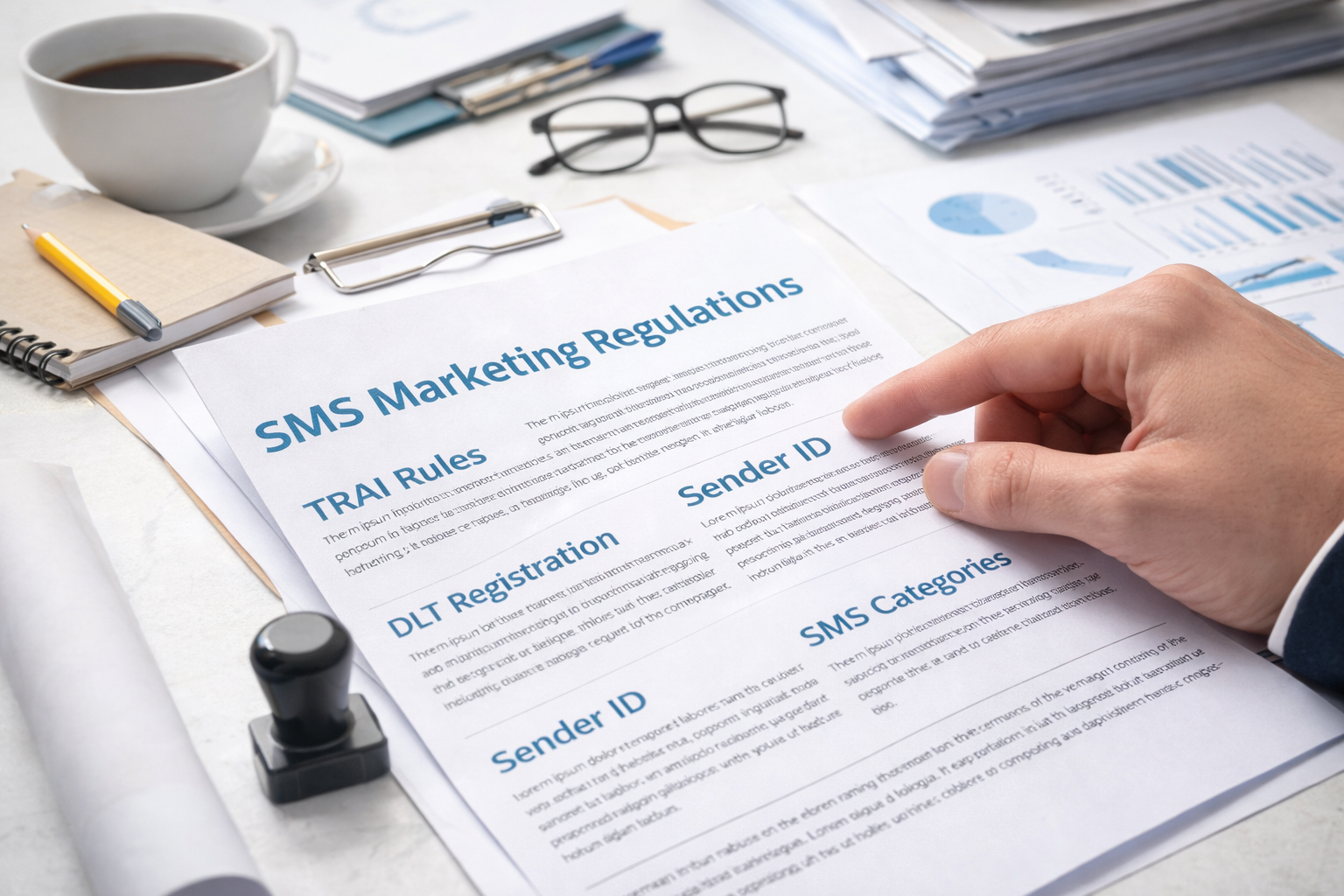
What Are The TRAI Rules For Bulk SMS Marketing?
Bulk SMS marketing is a very fast method of business communication with customers in India. To prevent spam and serve customers securely and safely, there are rules and regulations issued by the Telecom Regulatory Authority of India (TRAI) that every business organisation needs to follow. If your business includes sending promotional and/or transactional messages through bulk SMS marketing in India, it is essential to follow these rules and regulations.
The guide below explains the TRAI guidelines on the bulk SMS marketing of products in simple and easy-to-understand terms to help you understand what the specific requirements are.
Consent Is Mandatory Before Sending SMS
Customer consent is the most key requirement in TRAI. It means only those who have given you permission can get your marketing SMS. Those who don’t will be able to block your SMS even if your business is genuine.
You can seek customer consent through online forms, application signup, and offline documentation. Customer consent must be valid and trackable. Processing consent requests from any customer, once they withdraw consent, is imperative, and you must not send such customer promotional messages.
DLT Registration Is Compulsory
TRAI mandates that all companies that engage with the bulk SMS campaigns have to register on the DLT platform, which stands for “Distributed Ledger Technology.” It is the system that collects the data of companies, templates, sender IDs, and consents.
That means, without DLT registration, your message will never be delivered to the recipient. Telecom companies have to check messages against DLT databases before they get delivered to the end user. This applies to business organisations, no matter how many messages they send.
Sender ID and Message Template Approval
A registered Sender ID is required in all Bulk SMS submissions. A registered Sender ID is the name or alphanumeric code that is displayed as the source of a message on a Mobile Device, which can be a Mobile Phone, PDA, Smartphone, etc., that receives the message. Only approved Sender IDs can be used.
To make this process complete, it is essential that you also register your message templates. The templates are formatted according to the style you will use in the messages you dispatch. Even the slightest changes will affect the failure of messages. It also promotes fairness and avoids circulating misleading or wrong information.
Various Types of SMS Categories
TRAI classifies bulk SMS into several types, and depending on what type your SMS is, there are certain regulations to be followed.
Promotional SMS
They are marketing messages like offers, discounts, and sales updates. Such messages can only be sent to the user after taking consent and are restricted to being sent between 10 AM and 9 PM.
Transactional messages
They are important notifications such as OTPs, transactions, and order notifications. Such notifications can occur at all times and need no marketing consent.
Service or informational SMS
Updates from current services, such as appointment notifications and status updates. These may have consent rules based on the message content.
Mandatory Header Suffix Rule
TRAI has made it mandatory for every Sender ID to display a suffix, depending on the message type, and this will enable the customers to know the nature of the message immediately. The incorrect suffix will lead to your messages getting rejected and never reach your customers.
Promotional message use -P
Service messages use -S
Transactional messages contain -T
Gov messages involve -G
Message Content Needs To Be Clear And Honest
Your SMS text should be clear, genuine, and easy to understand. TRAI does not support any misleading, false, or confusing sender ID, or false urgency in the SMS text.
All marketing messages should come with an easy opt-out option, like this: “Reply STOP to unsubscribe.” This will allow subscribers to control what messages they receive and will help to boost trust in your brand.
Consequences of Non-Compliance with TRAI Guidelines
The businesses that ignore or don’t comply with the TRAI rules may end up with severe consequences. The message may be blocked without prior notice, the "Sender ID" may be suspended, and there may be financial penalties for repeated violations.
Non-compliance can also impact brand reputation. Customers are prone to ignoring or marking as spam messages from brands disregarding consent guidelines.
Why Should You Follow TRAI Rules?
TRAI guidelines ensure that customers and the business are protected. If you abide by TRAI guidelines, the possibility of delivery of your messages will be higher and customers will trust your communication process.
Having a compliant bulk SMS service from brands like Sequence Cloud Gateway could help in managing approvals, templates, and message types all in one place as well.
Conclusion
The regulations laid down by TRAI regarding bulk SMS marketing are tough but fair. The regulations mainly deal with the issues of consent, transparency, and customer control. After you register your business, the templates and consents are established, and bulk SMS marketing becomes a safe and successful means of communication for your business. Knowing these regulations is the beginning of effective and genuine SMS marketing.